Professional Electrical Transformer Supplier
Sarah Electric operates as a manufacturing facility with fully optimized production lines and stable supply capabilities. We offer a diverse range of electrical transformers—including both dry-type and oil-immersed models—spanning various voltage classes. These solutions are designed to adapt to a wide spectrum of engineering scenarios, facilitating efficient power transmission and distribution for both residential and industrial applications.
How Does an Electrical Transformer Work?
Transformers feature a robust internal structure and utilize electromagnetic induction to facilitate voltage conversion during operation.
Their basic construction consists of a closed iron core and high- and low-voltage coils wound around it. When an alternating current is applied to the high-voltage side, an alternating magnetic field is generated within the iron core. As this magnetic field traverses the low-voltage side, it induces a new alternating voltage within the low-voltage coils.
By adjusting the ratio of turns between the input and output coils, the transformer can precisely step down the voltage, thereby meeting specific project requirements.
What Are the Different Types of Electrical Transformers?
1. Distribution Transformer
Characteristics: Installed at the end of distribution lines; capable of long-term continuous operation; capacities typically range from 25 kVA to 5,000 kVA.
Function: Converts medium-voltage power into low-voltage power.
Common Applications: Residential buildings, commercial buildings, rural power grids, industrial parks, etc.
2. Power Transformer
Characteristics: Large capacity; high operational efficiency; suitable for high-voltage or ultra-high-voltage systems.
Function: Responsible for stepping up or stepping down high-voltage power.
Common Applications: Power generation plants, power transmission grids, and large-scale substations.
3. Oil-Immersed Transformer
Characteristics: Utilizes insulating oil for cooling and insulation; features strong heat dissipation capabilities, excellent overload capacity, and stable operation.
Common Applications: Power distribution systems, industrial manufacturing facilities, new energy power stations, and outdoor installation environments.
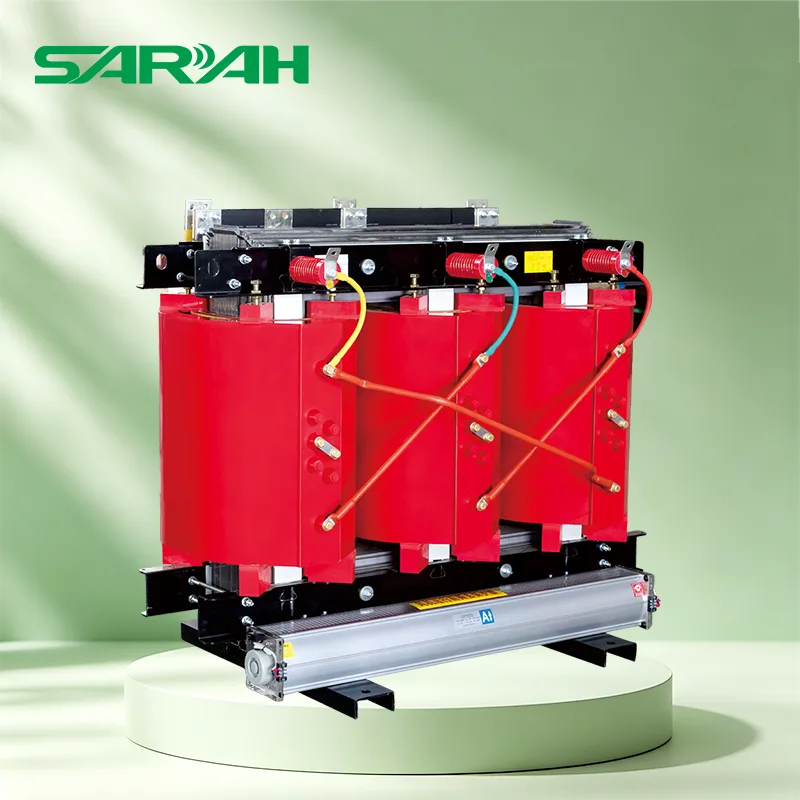
4. Dry-Type Transformer
Characteristics: Does not use insulating oil; relies on air or epoxy resin for insulation and heat dissipation; offers excellent fire resistance, safety, and environmental friendliness.
Common Applications: Areas with high pedestrian traffic, hospitals, schools, and other critical zones.
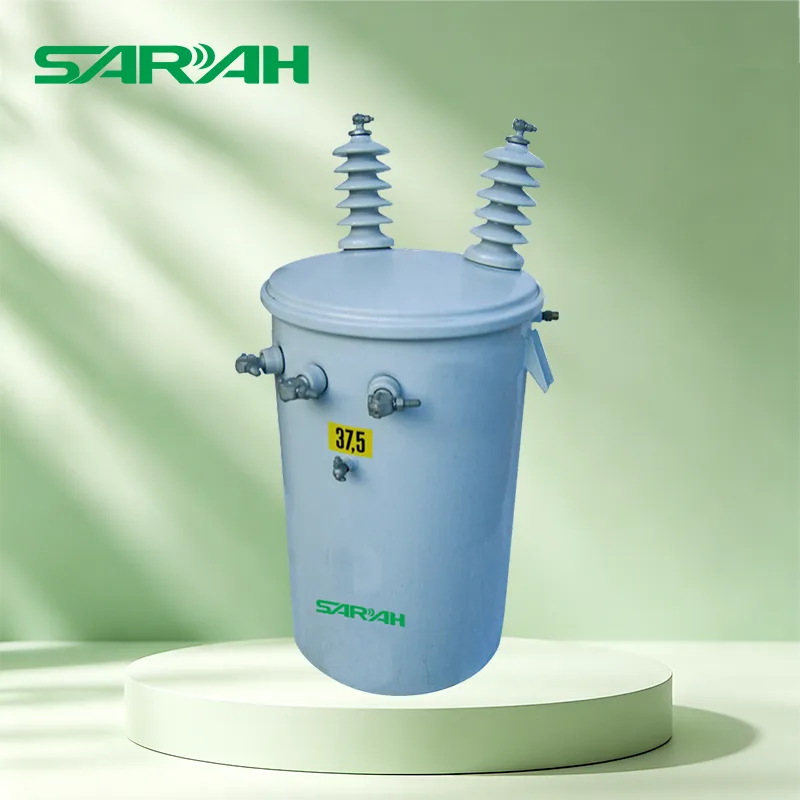
5. Pole-Mounted Transformer
Characteristics: Installed on utility poles; requires minimal ground space; involves low initial investment costs.
Common Applications: Rural and suburban power distribution systems.
6. Pad-Mounted Transformer
Characteristics: Features a fully enclosed cabinet design; installed on a ground-level concrete pad; offers high safety, superior protection against external elements, and low noise levels.
Common Applications: Commercial districts and residential communities within urban areas.
7. Isolation Transformer
Characteristics: Reduces electrical interference through electrical isolation; features complete separation between input and output circuits.
Function: Enhances equipment safety and improves power quality.
Common Applications: Medical equipment, automation control systems, precision instruments, and communication devices.
8. Furnace Transformer
Characteristics: Capable of ultra-high current output; possesses strong short-circuit withstand capability and high resistance to impact loads.
Function: Supplies power to high-energy-consumption equipment, such as electric arc furnaces and smelting furnaces.
Common Applications: Steel mills, the metallurgical industry, and non-ferrous metal processing facilities.
Quick Comparison Table
|
Type |
Voltage Level |
Installation Environment |
Main Applications |
|
Medium/Low Voltage |
Indoor / Outdoor |
Power Distribution Systems |
|
|
High/Extra-High Voltage |
Substation |
Power Transmission Systems |
|
|
Multiple Voltage Levels |
Primarily Outdoor |
Industry and Power Grids |
|
|
Medium/Low Voltage |
Indoor |
Commercial Buildings |
|
|
Medium/Low Voltage |
Outdoor |
Rural Power Distribution |
|
|
Medium/Low Voltage |
Outdoor |
Urban Power Distribution |
|
|
Isolation Transformer |
Low Voltage |
Indoor |
Equipment Protection |
|
Furnace Transformer |
Special High Current |
Industrial Site |
Smelting Industry |
Why Are Transformers Essential to Modern Society?
Because the proper functioning of power systems relies entirely on transformers; from power plants to end-users, virtually every kilowatt-hour of electricity must pass through a transformer.
High-efficiency transformers not only facilitate voltage conversion but also help users to:
● Enhance power transmission efficiency
● Minimize energy loss
● Safeguard equipment safety
● Improve power supply stability
● Reduce long-term operating costs
How to Select Transformer Voltage?
I. Selection of High-Voltage Side Voltage
The voltage on the high-voltage side of a transformer depends on the local power grid structure; it must precisely match the transmission voltage of the public grid or the upstream substation serving the project site.
Please refer to the following voltage guidelines—based on your specific country, region, and project requirements—or consult Sarah Electric directly:
11 kV: United Kingdom, Southeast Asia, Africa, Australia, India, and other regions utilizing Commonwealth-based electrical systems.
33 kV / 35 kV: Commonly used in large-scale industrial parks, medium-sized substations, or new energy power collection systems.
10 kV / 20 kV: Mainland China and certain European countries.
13.8 kV / 4.16 kV: Widely used in North America (US standards) and parts of South America.
II. Selection of Low-Voltage Side Voltage
The voltage on the low-voltage side of a transformer depends on the end-use load equipment; it must match the rated operating voltage of the factory production lines, commercial buildings, or residential power grids it serves.
Industrial Three-Phase Power: Used to drive heavy machinery, electric motors, variable frequency drives (VFDs), etc.
If the project is located in a region that adopts International Electrotechnical Commission (IEC) standards, 400 V (or 415 V under older standards) is typically selected.
If the project is located in North America (US standards), 480 V or 208 V may be required.
Residential / Single-Phase Power: Used for lighting, office equipment, and standard household appliances.
Common choices include 220 V, 230 V, or 240 V.
Need to start a new project? Provide the following information immediately, and Sarah Electric will respond to you promptly:
✓ Primary Voltage
✓ Secondary Voltage
✓ Required Capacity (kVA)
✓ Frequency (50Hz or 60Hz)
✓ Installation Environment (Indoor or Outdoor)
✓ Altitude
✓ Project Location (Country)

- View as

11KV Oil immersed Distribution Transformer
Sarah Electric is a leading supplier and manufacturer in Zhejiang, China, with its own advanced design team. Our 11KV Oil immersed Distribution Transformer is a core power equipment designed and produced for industrial distribution, municipal power supply, commercial buildings, industrial and mining enterprises, and other scenarios. If your industry and partners need to use this product, please contact us for customization and purchase!

24KV Oil immersed Distribution Transformer
The emergence of Sarah Electric's high-quality and durable 24KV Oil immersed Distribution Transformer is a high-performance distribution equipment designed to meet the upgrading needs of modern power systems. It breaks through the bottleneck of traditional transformer technology, with the core design concept of low energy consumption, high stability, and long life, perfectly matching the power supply needs of diverse scenarios such as industrial production, urban infrastructure, commercial operations, and rural revitalization. It has become a benchmark choice for power grid upgrading and enterprise energy-saving transformation.

35KV Pad Mounted Transformer
Choose Sarah Electric—a manufacturer and supplier of 35KV Pad Mounted Transformers with over 20 years of experience—for one-stop customization and after-sales technical support. Suitable for urban power distribution, commercial buildings, industrial parks, and new energy projects, this equipment offers high safety, a compact design, and ease of installation and maintenance.

110KV Power Transformer 20000KVA
Sarah Electric is a reliable manufacturer of 110KV Power Transformer 20000KVA, backed by over 20 years of experience and robust capabilities in R&D, production, and supply. Suitable for industrial applications, urban power distribution networks, and new energy projects, these transformers offer ease of installation and maintenance, with customization options available to meet specific project requirements.

36KV Dry Type Transformer
The 36KV Dry Type Transformer is one of the main products promoted by Yueqing Sarah Electric Co., Ltd. This series of products is designed specifically for medium voltage distribution networks, using imported epoxy resin vacuum casting. The coils are dense without air gaps and have strong moisture, dust, and corrosion resistance capabilities. Widely used in scenarios such as industrial plants, commercial buildings, data centers, and rail transit that require extremely high power supply stability.
24KV Dry Type Transformer
As a reliable manufacturer and supplier, SARAH Electric's 24KV Dry Type Transformer is suitable for light load and diversified power consumption scenarios. The product is optimized for common application conditions in power distribution systems, providing two basic transformer types: conventional and fully self-protection. The iron core can be made of coiled iron core (C.R.G.O material) or amorphous alloy iron core, balancing energy efficiency and cost, and meeting the reliability and energy-saving needs of power supply under different working conditions.
As a reliable Electrical Transformer manufacturer and supplier in China, we have our factory. If you want to buy high-quality products, please contact us.
News Recommendations