A 36KV dry type transformer is a medium-voltage power transformer designed for applications requiring a high-voltage insulation system and reliable electrical distribution. By using air and solid insulation rather than liquid dielectric oil, dry type designs can be suitable for indoor substations, industrial facilities, commercial buildings, and selected infrastructure projects. However, choosing the right unit requires more than checking its voltage rating. Buyers must evaluate rated capacity, primary and secondary voltages, insulation technology, cooling, environmental conditions, protection requirements, and applicable standards. This guide explains these factors and provides a practical checklist for specifying a transformer that meets project requirements while supporting safe operation and long-term value.
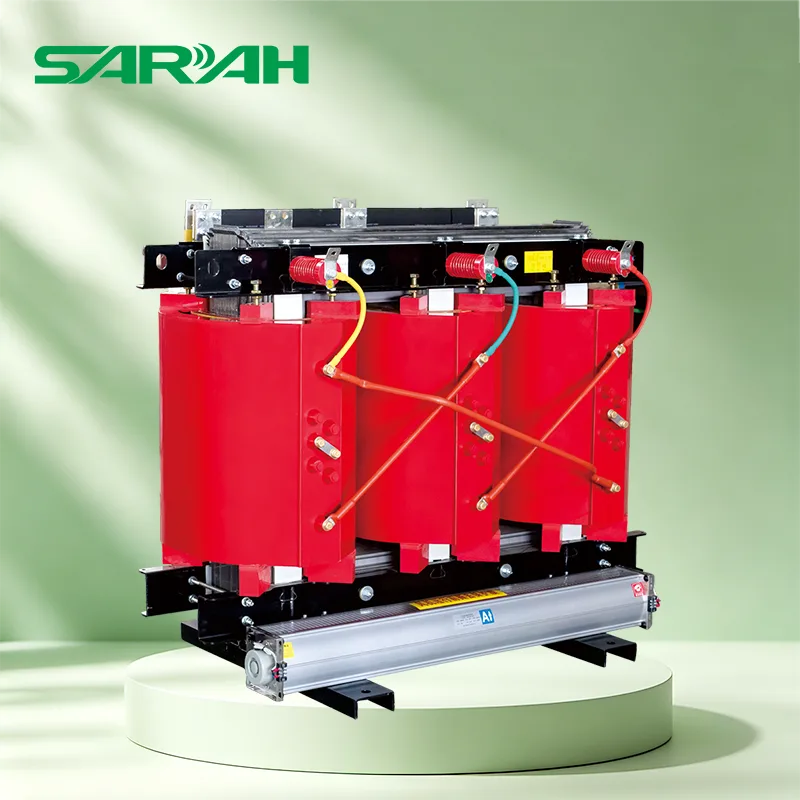
What Is a 36KV Dry Type Transformer?
A 36KV dry type transformer is a medium-voltage transformer designed around an insulation system suitable for equipment operating at a specified voltage class up to 36 kV. It transfers electrical energy between circuits through electromagnetic induction while changing the voltage level to meet the needs of a distribution network or electrical installation.
Unlike an oil-immersed transformer, a dry type transformer does not depend on a tank of liquid dielectric oil for its main winding insulation and cooling arrangement. Depending on the design, its windings use solid insulation, resin encapsulation, or an impregnated insulation system, with air serving as the cooling medium in conventional air-cooled configurations.
The designation 36KV should not be interpreted as a complete operating specification. The actual rated voltage, highest voltage for equipment, insulation level, winding configuration, and system grounding requirements must all be confirmed against the project documentation.
For engineering and procurement teams, the most important first step is to confirm that the transformer's voltage and insulation ratings match the intended electrical system. IEC 60076-11 is a key international standard covering dry-type power transformers, including relevant technical and testing requirements.
How Does a 36KV Dry Type Transformer Work?
The operating principle is the same as that of other conventional power transformers. Alternating current in the primary winding produces a changing magnetic flux in the core. This magnetic flux induces a voltage in the secondary winding, allowing electrical energy to be transferred at the required voltage level without a direct electrical connection between the two windings.
The voltage ratio is primarily determined by the turns ratio. In an idealized transformer, the relationship can be expressed as:
Voltage relationship:
V₁ / V₂ ≈ N₁ / N₂
V₁ and V₂ represent primary and secondary voltages; N₁ and N₂ represent the corresponding winding turns. Actual performance also depends on losses, impedance, loading, and operating conditions.
In a dry type design, the insulation system separates energized conductors from each other and from grounded components. Heat generated by winding resistance and core losses must be transferred away through the designed cooling path.
Many units use natural air circulation, commonly designated AN. Some designs incorporate forced-air cooling, commonly designated AF, when supported by the manufacturer's ratings and thermal design. Forced-air cooling must not be assumed to increase the transformer's permissible output unless that operating rating is explicitly specified.
Key components and their functions
- Magnetic core: Provides a path for magnetic flux and is designed to limit core losses.
- Primary winding: Receives electrical power from the incoming circuit.
- Secondary winding: Supplies power at the specified output voltage.
- Insulation system: Maintains electrical separation and withstands specified operating stresses.
- Cooling arrangement: Transfers heat away from the core and windings.
- Temperature monitoring and protection: Helps detect abnormal thermal conditions when included in the design.
Which Construction Types Should Buyers Understand?
Dry type transformers are not all constructed in the same way. The insulation method affects their suitability for different environments, installation conditions, maintenance practices, and budgets.
Cast resin dry type transformers
Cast resin transformers use resin encapsulation on specified windings, typically the medium-voltage windings. This construction can provide a robust insulation barrier and good resistance to moisture-related exposure when the equipment is correctly specified and installed. It is frequently considered for indoor substations, commercial facilities, and industrial applications where liquid insulation is undesirable.
Vacuum pressure impregnated transformers
Vacuum pressure impregnation, or VPI, uses an impregnation process to improve insulation and mechanical integrity. Depending on the specific design and environmental rating, VPI transformers can be appropriate for industrial applications where ventilation, cleanliness, and site conditions can be controlled.
| Consideration | Cast Resin | VPI |
|---|---|---|
| Insulation approach | Specified windings are encapsulated in resin | Windings use an impregnated insulation system |
| Moisture exposure | Can suit demanding conditions when appropriately rated | Suitability depends on insulation design and environmental conditions |
| Typical evaluation priorities | Environmental resistance, fire performance, partial discharge, and installation constraints | Thermal performance, insulation integrity, application suitability, and lifecycle cost |
| Selection principle | Verify test evidence and the specified environmental classification | Verify test evidence and the specified environmental classification |
Neither construction should be selected solely by price. The correct choice depends on the required electrical performance, installation environment, applicable standards, and manufacturer's documented capabilities.
Where Is a 36KV Dry Type Transformer Commonly Used?
Equipment in the 36 kV voltage class may be considered for medium-voltage distribution projects where the network design and insulation coordination require this class. Actual suitability depends on the local electrical system and the transformer's complete ratings.
Industrial manufacturing plants
Factories may use medium-voltage transformers to supply downstream distribution boards, production machinery, process systems, and auxiliary loads. Reliable operation is particularly important where an unplanned interruption can stop production or affect product quality.
Commercial buildings and large facilities
Large buildings, campuses, and multi-building developments may require dedicated substations to distribute power to lighting, HVAC equipment, elevators, and other electrical loads. Dry type designs can be useful when building layout and fire-safety requirements favor avoiding liquid-insulated equipment indoors.
Renewable energy and infrastructure projects
Selected solar, wind, transport, and utility infrastructure projects use medium-voltage transformers as part of their electrical conversion and distribution systems. Renewable energy applications may also introduce harmonic content, variable loading, or other operating conditions that should be addressed during specification.
Data centers and critical facilities
Facilities with stringent uptime requirements need careful coordination between transformers, switchgear, protective relays, backup power, and monitoring systems. Transformer selection should consider load growth, fault levels, redundancy architecture, and the consequences of an outage rather than focusing on nominal capacity alone.
What Are Its Main Advantages and Limitations?
The absence of liquid dielectric oil can simplify some installation and environmental considerations, but a dry type transformer is not maintenance-free or automatically suitable for every location.
| Factor | Potential Benefit | What Buyers Must Still Check |
|---|---|---|
| Fire safety | No tank of flammable transformer oil in conventional dry type designs | Fire classification, materials, local codes, and room requirements |
| Environmental protection | No routine risk of dielectric oil leakage | Dust, condensation, corrosion, and enclosure suitability |
| Maintenance | No dielectric oil sampling or oil replacement for an oil-free design | Cleaning, electrical inspection, cooling, and condition monitoring |
| Indoor installation | Can be suitable for appropriately designed indoor substations | Ventilation, clearances, noise, access, and heat rejection |
| Operating cost | Potentially reduced fluid-related maintenance requirements | Purchase cost, electrical losses, service life, and downtime exposure |
Dry type units still generate heat and may be sensitive to contamination, inadequate airflow, or unsuitable humidity conditions. They can also have higher initial costs than some comparable oil-immersed alternatives. A sound purchasing decision compares total ownership cost, safety requirements, site limitations, and the consequences of equipment failure.
How Should You Select the Right 36KV Dry Type Transformer?
Choosing a transformer by voltage class alone is one of the most common specification mistakes. A complete technical review helps prevent mismatched equipment, project delays, and costly changes during installation.
1. Confirm primary and secondary voltage
Specify the actual incoming system voltage and the required output voltage. Confirm the highest voltage for equipment, winding configuration, frequency, tap requirements, and connection group. The 36 kV designation alone does not determine the transformer's secondary voltage.
2. Calculate the required rated capacity
Determine the maximum demand using a realistic load study. Account for simultaneous operation, motor starting, nonlinear loads, planned expansion, and the project's operating profile. For a balanced three-phase system, apparent power can be estimated using:
S = √3 × V × I
S is apparent power in VA, V is line-to-line voltage in volts, and I is line current in amperes. Engineering calculations must use consistent units and account for the actual load conditions.
A suitable design margin should be based on the load forecast and project requirements rather than an arbitrary percentage. Excessive oversizing can increase initial costs and reduce efficiency at some operating loads, while undersizing may cause overheating or restrict future expansion.
3. Evaluate insulation and temperature rise
Confirm the insulation system, rated temperature rise, ambient temperature assumptions, and permissible loading conditions. A higher insulation class does not automatically mean that the transformer can continuously carry more power; the complete thermal design and nameplate rating remain decisive.
4. Check impedance and fault levels
Transformer impedance affects voltage regulation and prospective short-circuit current. Coordinate the specified impedance with the switchgear rating, protective devices, system fault study, and any parallel-operation requirements.
5. Specify cooling and enclosure protection
Choose natural or forced-air cooling based on the manufacturer's rated configuration. Determine the enclosure's required ingress protection by considering dust, water exposure, personnel access, ventilation, and maintenance needs. A more enclosed cabinet is not automatically better if it compromises heat dissipation.
6. Verify the relevant standards and tests
Confirm the required edition of IEC 60076-11 or the applicable national or regional equivalent, together with any utility-specific project specification. Request the relevant routine test reports and agree on any type, special, or site acceptance tests required by the contract.
| Specification Item | Information to Provide |
|---|---|
| Voltage | Primary voltage, secondary voltage, equipment voltage class, and insulation level |
| Capacity | Required kVA or MVA and load profile |
| Electrical configuration | Phase, frequency, vector group, tap range, and grounding arrangement |
| Thermal design | Cooling method, ambient conditions, temperature rise, and overload requirements |
| Installation environment | Indoor or outdoor use, altitude, humidity, dust, pollution, and enclosure requirements |
| Protection and monitoring | Temperature sensors, alarms, trips, enclosure, and interface requirements |
| Compliance and testing | Applicable standards, required test reports, inspection, and documentation |
What Installation Factors Affect Performance?
Even a correctly specified transformer can experience premature deterioration if installation conditions do not match its design. Installation should be completed by qualified personnel in accordance with the manufacturer's instructions and the applicable electrical codes.
Site preparation and ventilation
- Verify that the foundation is level and capable of supporting the equipment and associated accessories.
- Maintain the manufacturer's specified clearances around the transformer and its ventilation openings.
- Ensure that the room can remove the heat produced by the transformer and other electrical equipment.
- Prevent excessive dust, moisture, corrosive contaminants, and foreign objects from entering the equipment.
- Provide sufficient working space for inspection, testing, and future replacement of components.
Electrical connections and protection
Check the nameplate and approved drawings before making connections. Confirm the phase sequence, cable terminations, earthing, protective relay settings, and compatibility with the associated switchgear. Cable support and termination arrangements should prevent undue mechanical stress on transformer terminals.
Pre-energization inspection
Before energization, qualified personnel should complete the manufacturer's prescribed inspections and electrical tests. Depending on the design and project requirements, these may include insulation checks, winding resistance measurements, turns-ratio verification, connection checks, and functional testing of monitoring and protection circuits.
How Can You Maintain Reliable Operation?
Dry type transformers generally avoid liquid-insulation servicing, but regular condition checks remain essential. The inspection frequency should reflect the manufacturer's guidance, operating history, environmental exposure, load profile, and criticality of the installation.
Recommended maintenance priorities
- Visual inspection: Look for contamination, physical damage, loose external components, unusual discoloration, or signs of overheating.
- Ventilation: Check that cooling passages, air inlets, fans, and outlets remain unobstructed.
- Temperature monitoring: Review temperature trends, alarms, and trip events against the equipment's specified limits.
- Electrical connections: Inspect and test connections using the manufacturer's procedures and appropriate isolation measures.
- Environmental control: Investigate condensation, water ingress, excessive dust, or corrosive deposits.
- Protection systems: Test sensors, alarm circuits, trip logic, and associated protective devices at the prescribed intervals.
- Operating records: Record load, temperature, inspection results, alarms, and corrective work to identify developing problems.
Unusual noise, persistent high temperatures, repeated protection trips, or visible insulation damage should be investigated promptly. Operators should not continue running equipment outside its approved limits simply because the transformer still appears to function.
Condition-based maintenance can help identify problems before they cause an outage, but diagnostic methods and acceptance criteria should be chosen by qualified engineers with reference to the manufacturer's instructions and relevant standards.
What Should You Confirm Before Purchasing?
For project buyers, the challenge is not simply finding a manufacturer that offers a 36KV dry type transformer. It is confirming that the proposed model satisfies the electrical design, site conditions, contractual requirements, and delivery schedule.
Review the technical proposal
Ask the supplier to provide a datasheet, outline drawing, nameplate information, electrical ratings, loss data, impedance, cooling method, and applicable test documentation. Clarify any deviations from the project specification before approving the design.
Evaluate manufacturing and quality controls
Request information about production processes, inspection procedures, material traceability, and quality documentation. Where relevant, review factory test arrangements and agree on inspection or witness-testing requirements before production begins.
Compare lifecycle costs
Purchase price is only one part of the decision. Consider transformer losses over the expected operating profile, installation requirements, maintenance resources, spare parts, warranty conditions, and the financial impact of downtime.
Confirm project delivery requirements
Discuss packaging, transport dimensions, lifting arrangements, delivery lead time, site access, documentation, and after-sales support. For international projects, confirm the destination country's standards, voltage system, language requirements, and import documentation in advance.
Yueqing Sarah Electric Co., Ltd. can be included in your supplier evaluation process when sourcing electrical equipment. For any proposed 36KV dry type transformer, purchasers should request model-specific specifications and supporting documents to establish its suitability for the intended application.
- Confirm the required voltage class and both winding voltages.
- Provide the rated capacity and expected load profile.
- Define insulation, cooling, enclosure, and environmental requirements.
- Specify applicable standards and required testing documentation.
- Review technical deviations, delivery terms, and warranty conditions.
- Obtain a written quotation based on the confirmed technical scope.
Frequently Asked Questions About 36KV Dry Type Transformers
1. What does 36KV mean on a dry type transformer?
It refers to the transformer's specified medium-voltage equipment class or related voltage designation. The exact meaning must be confirmed from the nameplate and technical datasheet, including the rated winding voltages and highest voltage for equipment.
2. Is a 36KV dry type transformer suitable for indoor installation?
It can be suitable for indoor substations and electrical rooms when the design, insulation system, enclosure, fire requirements, ventilation, and installation conditions meet the project's specifications and local regulations.
3. Is a dry type transformer safer than an oil-immersed transformer?
Dry type construction eliminates the need for a tank of liquid dielectric oil, which can reduce oil leakage concerns and certain fire-related risks. However, the overall safety of an installation also depends on the transformer design, fire classification, protection systems, electrical clearances, and applicable codes.
4. How do I calculate the required transformer capacity?
Start with a load study covering connected loads, demand, power factor, motor starting, harmonics, and future expansion. Convert the expected demand into the required kVA or MVA rating and verify the result with a qualified electrical engineer and the supplier.
5. Does a 36KV dry type transformer require regular maintenance?
Yes. Although it does not require routine dielectric oil servicing, it still needs inspections, cleaning when appropriate, cooling-system checks, temperature monitoring, and electrical testing according to the manufacturer's maintenance schedule.
6. Which standards should a 36KV dry type transformer meet?
IEC 60076-11 is an important international reference for dry-type power transformers. Depending on the destination market and project, additional national standards, utility specifications, electrical installation codes, and contractual testing requirements may apply.
7. Can a dry type transformer operate in a humid or dusty environment?
Suitability depends on the insulation construction, environmental classification, enclosure protection, ventilation, and actual site conditions. The purchaser should specify humidity, condensation, pollution, dust, and corrosion exposure so the manufacturer can recommend an appropriate design.
8. What information is needed to request a quotation?
Provide the primary and secondary voltages, rated capacity, frequency, phase configuration, vector group, impedance, insulation requirements, cooling method, installation environment, applicable standards, accessories, and delivery destination. A load profile and project specification are also helpful.
9. Can a 36KV dry type transformer be customized?
Configuration options depend on the manufacturer's engineering and production capabilities. Potential project-specific requirements may include voltage ratio, capacity, taps, enclosure, monitoring, terminal arrangements, and accessories. Confirm every requested option in the technical proposal before placing an order.
10. What documents should I request before approving an order?
Request the approved datasheet, drawings, technical compliance statement, applicable test reports, installation and maintenance instructions, warranty terms, and any project-required quality or conformity documents. Verify that all documents refer to the actual proposed model.
Looking for a 36KV Dry Type Transformer for Your Next Project?
Selecting the right medium-voltage transformer starts with a clear understanding of your network voltage, load requirements, installation environment, and applicable technical standards. A well-prepared specification helps reduce procurement uncertainty, prevent design mismatches, and support reliable power distribution over the equipment's service life.
Yueqing Sarah Electric Co., Ltd. welcomes project inquiries from electrical equipment distributors, engineering contractors, industrial buyers, and procurement teams. Share your technical requirements and project details to discuss the appropriate equipment options and documentation.
Need help with your transformer sourcing requirements? Contact us to discuss your application, request product information, and clarify the specifications needed for your project evaluation.
Contact Us for Your Project Inquir.