Stationary non-rotating components: There is no mechanical movement. Energy is transmitted solely through electromagnetic induction. They operate reliably, are simple to maintain, have a low failure rate, and have a long service life (usually 20-30 years).
The frequency is strictly maintained at a constant level: When changing the voltage/current, the output's alternating frequency is consistent with the input frequency (such as 50Hz in our country's power grid), ensuring the normal operation of electrical equipment.
Electric energy transmission and electrical isolation: Electric energy is transmitted through magnetic coupling. The primary and secondary windings have no direct electrical connection, achieving isolation between high and low voltage circuits, ensuring the safety of the system and personnel.
The voltage and current variation rules are clear: the voltage ratio is approximately equal to the number of turns ratio, and the current ratio is approximately inversely proportional to the number of turns ratio. This enables precise design and implementation of voltage boosting or reduction, meeting the requirements of power transmission and distribution.
There are inherent losses: the hysteresis/eddy current losses (no-load losses) of the iron core and the resistance losses of the windings (load losses). High-quality design and materials can significantly reduce these losses and improve energy efficiency.
Different types of differentiation features
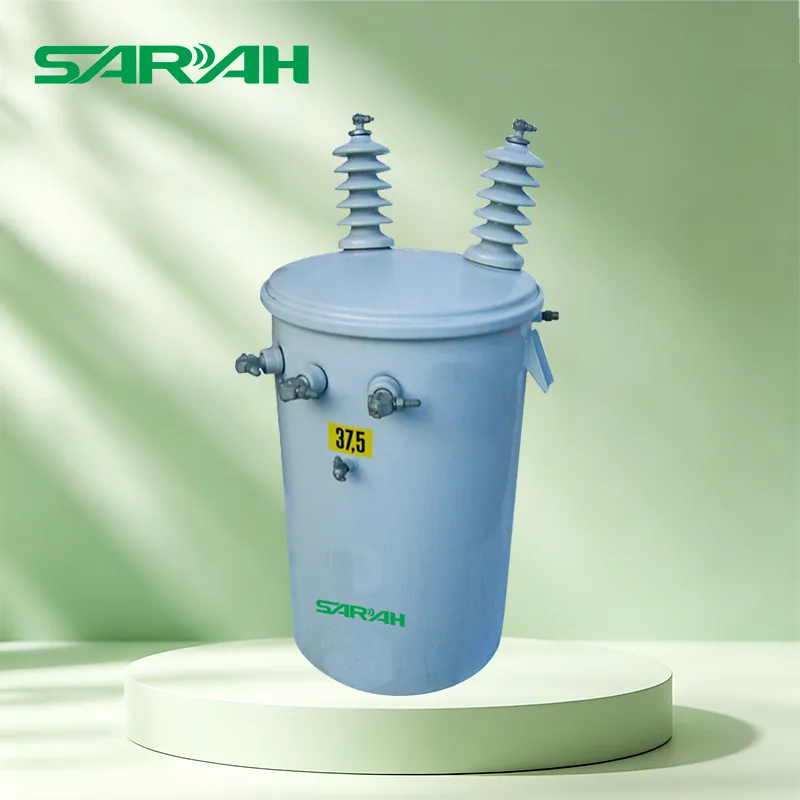
Oil-immersed transformer: It has excellent insulation and heat dissipation performance, suitable for high-voltage and large-capacity outdoor scenarios (such as regional substations), with moderate cost and long lifespan; however, there is a risk of oil leakage, and regular maintenance of the oil quality is required.
Dry-type transformer: Oil-free design, fireproof and explosion-proof, low noise, small size. Suitable for indoor environments (such as office buildings, subways) and places with high fire safety requirements; however, it has a higher cost and is difficult to dissipate heat for large capacities.
Amorphous alloy transformer: The core is made of amorphous alloy material. The no-load loss is approximately 70% lower than that of traditional silicon steel sheet cores. The no-load current is smaller, resulting in significant energy-saving effects. It is mostly used in power distribution scenarios where energy consumption is sensitive.
Three-dimensional rolled iron core transformer: With a seamless structure, it has low magnetic resistance, further reduces no-load loss and noise, and has a compact design, suitable for load centers such as urban power grids and high-rise buildings.
Application adaptation characteristics
Adapting to the entire power grid chain: At the power generation end, voltage is increased to reduce transmission losses; at the distribution end, voltage is reduced to meet the electricity demands of users. This is the "hub" for power transmission and distribution.
Wide capacity coverage: From distribution transformers of several tens of kVA to large power station transformers of several hundred MVA, it can meet the power supply demands of different scales.
Strong anti-short-circuit and overload resistance: By optimizing the winding structure (such as self-adhesive interlaced conductors), strengthening the fixation of the core and the body, the ability to withstand sudden short circuits is enhanced, and it is suitable for grid impact loads.
Intelligent upgrade trend: New products integrate condition monitoring (oil temperature, gas, partial discharge) and communication modules, supporting remote operation and maintenance, thereby enhancing reliability and operational efficiency.
We use cookies to offer you a better browsing experience, analyze site traffic and personalize content. By using this site, you agree to our use of cookies. Privacy Policy