How Can a 20KV Power Transformer Deliver Reliable and Efficient Industrial Power?
A 20KV Power Transformer plays a critical role in medium-voltage power distribution, industrial facilities, commercial buildings, renewable energy projects, and utility networks. The right transformer must do more than convert voltage. It must provide stable operation, manageable losses, dependable insulation performance, appropriate thermal capacity, and long service life under real operating conditions.
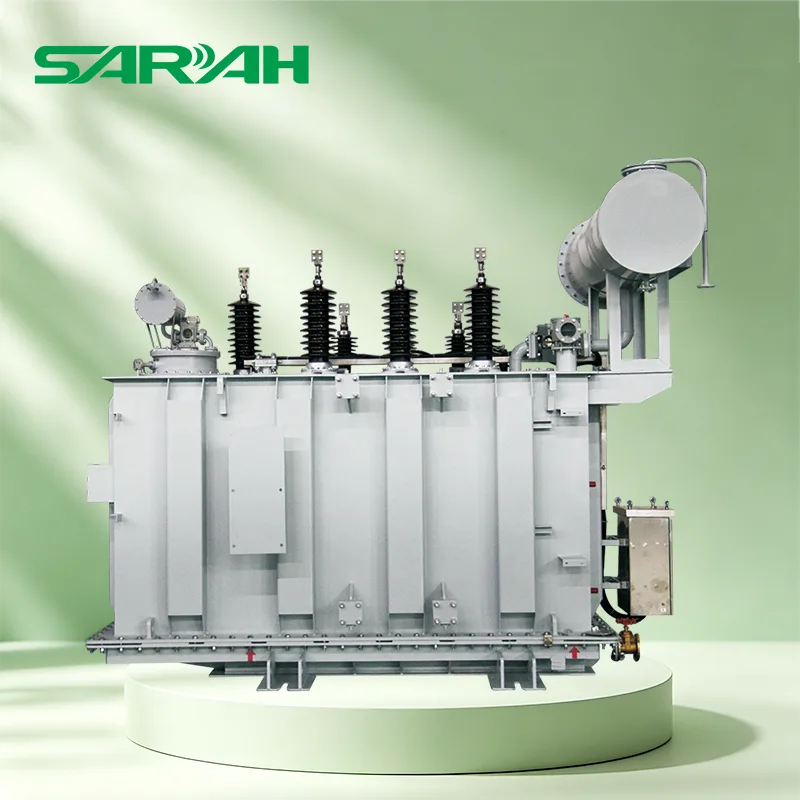
Selecting a 20KV Power Transformer requires a complete understanding of voltage requirements, rated capacity, load characteristics, installation environment, cooling conditions, insulation performance, protection systems, maintenance requirements, and lifecycle cost. A transformer that appears economical at the purchasing stage may become expensive if it produces excessive losses, operates at high temperatures, or requires frequent maintenance. This guide explains the key technical considerations, common applications, purchasing factors, and practical maintenance principles that help industrial buyers build a safer and more reliable medium-voltage power system.
Table of Contents
- What Is a 20KV Power Transformer?
- Why Is 20KV Transformation Important?
- How Is a 20KV Power Transformer Constructed?
- What Should Buyers Consider Before Purchasing?
- How Should Transformer Capacity Be Calculated?
- How Can Transformer Efficiency Be Improved?
- Where Are 20KV Power Transformers Used?
- What Are the Main Transformer Configuration Differences?
- How Can Maintenance Extend Transformer Life?
- What Purchasing Mistakes Should Be Avoided?
- Why Work With Yueqing Sarah Electric Co., Ltd.?
- Frequently Asked Questions
What Is a 20KV Power Transformer?
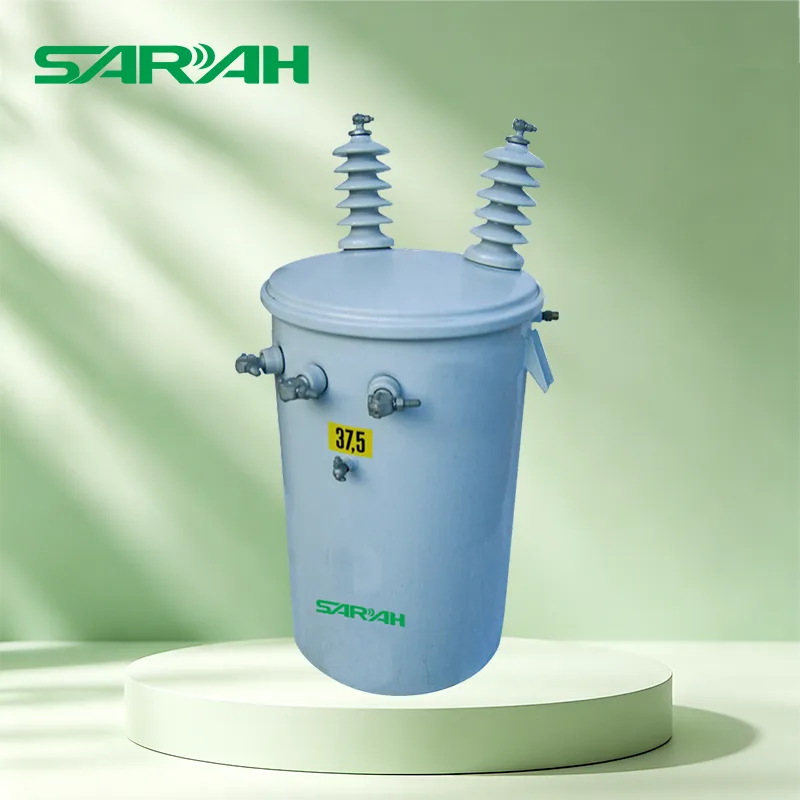
A 20KV Power Transformer is a medium-voltage transformer designed to transfer electrical energy between voltage levels while maintaining the required power characteristics of the system. In practical applications, a 20 kV primary-side voltage may be transformed to a lower distribution voltage suitable for factories, commercial facilities, infrastructure projects, or other electrical loads.
The transformer does not simply reduce voltage. It also provides electrical isolation between windings, supports stable power distribution, and forms an important part of the overall protection and distribution architecture.
Key point: A transformer should always be specified according to the complete electrical system rather than voltage alone. Rated capacity, frequency, connection arrangement, insulation level, cooling method, environmental conditions, and load profile all influence the final configuration.
Why Is 20KV Transformation Important?
Medium-voltage distribution allows electrical energy to be transmitted and distributed efficiently before being converted to a utilization voltage. For industrial users, the transformer is often positioned between the incoming medium-voltage network and the facility's low-voltage distribution system.
Stable Distribution
Provides a controlled voltage conversion point for downstream electrical equipment.
Energy Management
Appropriate transformer design can help reduce unnecessary electrical losses during long operating periods.
System Protection
Works with switchgear, circuit breakers, relays, and monitoring equipment to support system protection.
Industrial Reliability
Helps deliver dependable power to production lines and other critical electrical loads.
How Is a 20KV Power Transformer Constructed?
Although construction varies according to the transformer type and project specification, the major electrical and mechanical components generally include a magnetic core, high-voltage winding, low-voltage winding, insulation system, enclosure or tank, cooling structure, terminals, and protection or monitoring accessories.
| Component | Primary Function | Buyer Concern |
|---|---|---|
| Magnetic Core | Provides the magnetic path for energy transfer. | Core material and losses. |
| HV Winding | Handles the medium-voltage side. | Insulation, conductor design, and voltage withstand. |
| LV Winding | Supplies the required downstream voltage. | Rated current and load compatibility. |
| Insulation System | Separates energized components electrically. | Dielectric strength and service environment. |
| Cooling System | Controls operating temperature. | Ambient temperature, ventilation, and load profile. |
What Should Buyers Consider Before Purchasing?
Buying a 20KV Power Transformer based only on the nameplate voltage is a common procurement mistake. A professional specification should consider the complete operating environment and expected electrical demand.
- Rated voltage: Confirm the primary and secondary voltage requirements and the local grid conditions.
- Rated capacity: Select a suitable kVA or MVA rating according to present and expected loads.
- Frequency: Confirm whether the system operates at 50 Hz, 60 Hz, or another required frequency.
- Phase configuration: Determine whether a three-phase or specialized configuration is required.
- Connection group: Specify the appropriate winding connection and phase displacement.
- Insulation requirements: Consider voltage withstand, environmental conditions, and applicable project standards.
- Cooling: Match the cooling arrangement with load, ambient temperature, enclosure, and installation conditions.
- Installation environment: Account for altitude, humidity, dust, corrosive gases, temperature, and indoor or outdoor installation.
- Protection: Confirm compatible breakers, relays, temperature monitoring, surge protection, and other accessories.
- Maintenance access: Ensure that inspection points and service areas are practical for long-term operation.
How Should Transformer Capacity Be Calculated?
Transformer capacity should reflect actual demand rather than simply adding every connected load at full rating. Engineers normally review connected load, demand factor, diversity, motor starting characteristics, harmonic content, future expansion, and expected operating conditions.
Practical principle: Undersizing may cause excessive temperature rise, voltage problems, nuisance protection trips, and accelerated aging. Excessive oversizing can increase initial investment and may reduce economic efficiency because fixed losses continue even when the transformer is lightly loaded.
For this reason, project engineers should evaluate both the current load and the expected development of the facility. A manufacturing plant that plans to add production equipment in the next few years may require a different transformer capacity from a facility with stable demand.
How Can Transformer Efficiency Be Improved?
Transformer efficiency is influenced by both no-load losses and load-related losses. Because transformers can operate continuously for many years, even relatively small differences in losses can become significant over the equipment lifecycle.
- Choose a core design appropriate for the required voltage and capacity.
- Use suitable conductor dimensions to control winding losses.
- Select a transformer capacity that matches the actual load profile.
- Maintain appropriate cooling and ventilation conditions.
- Prevent long-term operation under excessive overload.
- Monitor temperature and abnormal operating conditions.
- Keep terminals, connections, and protection equipment in good condition.
- Evaluate lifecycle operating cost rather than focusing only on purchase price.
International transformer standards also address energy performance and evaluation methods. For example, IEC TS 60076-20 provides approaches for defining energy efficiency and evaluating transformer energy performance. :contentReference[oaicite:1]{index=1}
Where Are 20KV Power Transformers Used?
The 20KV voltage class is relevant to many medium-voltage distribution systems. The exact configuration depends on the local electrical network and project requirements.
Manufacturing Plants
Supports production lines, motors, HVAC systems, lighting, compressors, pumps, and automation equipment.
Commercial Facilities
Can support malls, office complexes, hotels, warehouses, and large commercial buildings.
Infrastructure
Suitable for selected transport, municipal, utility, and infrastructure distribution applications.
Renewable Energy
Can form part of electrical collection or distribution systems where voltage conversion is required.
What Are the Main Transformer Configuration Differences?
| Configuration | Typical Strength | Important Consideration |
|---|---|---|
| Oil-Immersed | Strong heat dissipation and suitability for many outdoor applications. | Requires appropriate oil management and installation safety measures. |
| Dry-Type | Useful where indoor installation and reduced liquid-related concerns are priorities. | Ventilation, ambient temperature, and installation environment require careful consideration. |
| Customized Design | Can address unusual voltage, capacity, environmental, or installation requirements. | Requires detailed technical communication between buyer and manufacturer. |
For dry-type transformers, IEC 60076-11 covers dry-type power transformers with certain voltage and application boundaries, making it important to confirm the applicable standard and project specification before selecting a configuration. :contentReference[oaicite:2]{index=2}
How Can Maintenance Extend Transformer Life?
A well-designed transformer still requires appropriate operation and maintenance. Preventive inspection can identify developing problems before they cause unexpected shutdowns.
| Inspection Area | What to Check |
|---|---|
| Temperature | Look for abnormal temperature rise or changes from normal operating conditions. |
| Connections | Check terminals, cable connections, and signs of overheating or looseness. |
| Insulation | Monitor insulation condition according to the maintenance program. |
| Cooling | Ensure cooling equipment and ventilation paths remain unobstructed. |
| Protection | Verify the condition and settings of associated protective devices. |
For mineral-oil-immersed transformers, loading and temperature management are especially important because operating temperature and load conditions influence thermal aging and transformer life. IEC 60076-7 provides guidance related to loading and operating temperatures for mineral-oil-immersed transformers. :contentReference[oaicite:3]{index=3}
What Purchasing Mistakes Should Be Avoided?
- Choosing only by voltage: A 20 kV rating does not define the complete transformer specification.
- Ignoring future load growth: A facility may quickly outgrow an undersized transformer.
- Focusing only on purchase price: Operating losses, maintenance, transportation, installation, and service should also be considered.
- Ignoring environmental conditions: Temperature, altitude, humidity, dust, and corrosive environments can affect performance.
- Using incomplete technical documents: Missing information can create delays during design approval and procurement.
- Underestimating after-sales support: Spare parts, technical assistance, commissioning support, and troubleshooting can matter significantly over the equipment lifecycle.
Why Work With Yueqing Sarah Electric Co., Ltd.?
For buyers searching for a reliable 20KV Power Transformer supplier, manufacturer capability should be evaluated beyond product appearance or a basic quotation. Technical communication, customization capability, quality control, documentation, delivery coordination, and long-term service all contribute to project success.
Yueqing Sarah Electric Co., Ltd. focuses on electrical equipment and power distribution solutions, providing customers with products designed around practical project requirements. For industrial and commercial buyers, working with a supplier that can understand voltage levels, rated capacity, installation conditions, protection requirements, and application-specific specifications can simplify the procurement process.
Application-Focused
Product recommendations can be aligned with actual electrical application requirements.
Technical Communication
Clear specifications help reduce misunderstandings during project planning and purchasing.
Project Flexibility
Different projects may require different voltage, capacity, configuration, and installation solutions.
Long-Term Value
A complete procurement approach considers reliability, efficiency, maintenance, and service.
Before requesting a quotation, buyers should prepare basic project information such as input voltage, output voltage, rated capacity, frequency, phase, installation location, ambient conditions, load type, applicable standards, and expected delivery requirements. More complete information allows the manufacturer to provide a more accurate technical proposal.
Frequently Asked Questions
1. What does 20KV mean in a power transformer?
20KV generally refers to a rated voltage level of approximately 20 kilovolts on one side of the transformer. The exact specification must be confirmed according to the electrical network and project requirements.
2. Is a 20KV transformer suitable for industrial applications?
Yes. 20KV transformers can be used in various industrial medium-voltage distribution systems, provided that the voltage, capacity, insulation, cooling, protection, and environmental requirements are correctly matched.
3. How do I determine the required transformer capacity?
Start with the facility's actual electrical demand, then consider demand factors, motor starting conditions, load diversity, future expansion, and operating characteristics. The final capacity should be confirmed by a qualified electrical engineer.
4. What is more important, transformer price or efficiency?
Both matter, but purchase price alone does not represent the total cost of ownership. Energy losses, maintenance, service life, installation, and downtime should also be evaluated.
5. Can a 20KV transformer be customized?
Many transformer projects can be customized according to voltage ratio, capacity, connection arrangement, cooling method, installation environment, protection requirements, dimensions, and other project-specific conditions. Customization should be confirmed with the manufacturer before production.
6. Which standards are relevant to power transformers?
IEC 60076 is a major international transformer standard series. Different parts address subjects including general requirements, insulation and dielectric testing, dry-type transformers, loading guidance, and energy efficiency. The applicable standard should be confirmed according to the transformer type and destination market.
7. What information should I provide when requesting a quotation?
Provide primary and secondary voltage, capacity, frequency, phase, installation environment, transformer type, connection requirements, cooling requirements, applicable standards, quantity, destination, and any special technical requirements.
8. How can transformer service life be improved?
Appropriate loading, effective cooling, regular inspection, correct protection settings, good connection maintenance, and timely troubleshooting can help maintain reliable transformer operation and reduce avoidable aging.
Build a More Reliable Medium-Voltage Power System
Choosing the right 20KV Power Transformer requires more than comparing quotations. The correct solution should match your electrical load, operating environment, efficiency expectations, protection system, installation conditions, and long-term project goals. Yueqing Sarah Electric Co., Ltd. can help industrial and commercial buyers evaluate their transformer requirements and develop a practical power distribution solution.
Need a 20KV Power Transformer for your project? Contact us today to discuss your voltage, capacity, application, and customization requirements.
Related News
- How Does a 24KV Solid Insulated Ring Main Unit Improve Power Distribution Safety and Reliability?
- What Is a 36KV Dry Type Transformer and How Can It Improve Power Distribution Safety?
- What Is a 33kV Pole Mounted Transformer and How Does It Support Reliable Power Distribution?
- How Does a 145KV Power Transformer Deliver Reliable High-Voltage Power?
- How Does a 110KV Power Transformer 20000KVA Improve High-Voltage Power Transmission Efficiency?
- How Does a 33KV Oil Immersed Distribution Transformer Support Reliable Power Distribution?
Leave me a message


News Recommendations