What Are Overhead Line Fittings Used For in Power Transmission Systems?
Imagine a transmission line stretching for hundreds of kilometers across rugged terrain, crossing mountains, rivers, and sprawling cities. The conductors, suspended from towering steel structures, carry immense electrical power to millions of consumers. These conductors are subjected to relentless forces: the pull of gravity, the weight of ice and snow, the buffet of high winds, and the constant vibration caused by the flow of air. Yet the line stays aloft, year after year, delivering power with remarkable reliability. The unsung heroes of this engineering marvel are the Overhead Line Fittings—the critical components that connect, support, protect, and terminate the conductors and other elements of the transmission system. Without these seemingly simple metallic devices, the entire infrastructure would collapse under its own weight or fail under the first storm.
So, what exactly are Overhead Line Fittings used for in power transmission systems? Their roles can be grouped into four essential functions: mechanical support, which ensures conductors are held at the correct position and tension; electrical continuity, which provides reliable connections for current flow; vibration and damage protection, which mitigates the effects of wind-induced oscillation and other dynamic loads; and environmental durability, which ensures long-term performance in harsh conditions. From the smallest clamp to the most complex tension assembly, every Overhead Line Fitting is engineered to perform a specific, critical task. This article will take you through the full spectrum of these components, from their basic definitions and classifications to the technical specifications that define their performance. We will explore how they support conductors, ensure electrical continuity, mitigate damaging vibrations, and survive in extreme environments. By the end, you will understand why these fittings are indispensable to modern power transmission.

Table of Contents
- 1. What Are Overhead Line Fittings? A Comprehensive Introduction
- 2. How Do Overhead Line Fittings Support and Protect Conductors?
- 3. What Role Do Overhead Line Fittings Play in Electrical Continuity?
- 4. How Do Overhead Line Fittings Mitigate Vibration and Prevent Damage?
- 5. How Do Overhead Line Fittings Ensure Long-Term Reliability in Harsh Environments?
- 6. Frequently Asked Questions (FAQ)
- 7. About Yueqing Sarah Electric Co., Ltd.
- 8. Conclusion
1. What Are Overhead Line Fittings? A Comprehensive Introduction
An Overhead Line Fitting is a generic term for a wide range of metallic hardware components used in the construction and maintenance of overhead power transmission and distribution lines. These fittings serve as the essential connectors and supports that join conductors to insulators, insulators to towers, and conductors to each other. In essence, Overhead Line Fittings are the "joints and ligaments" of the transmission system—they provide the mechanical and electrical links that make the entire structure functional and resilient.
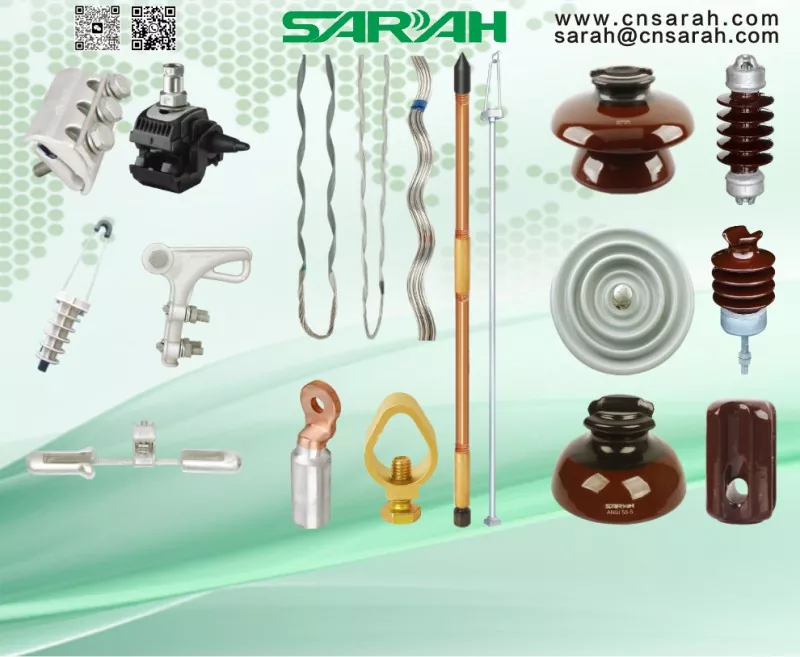
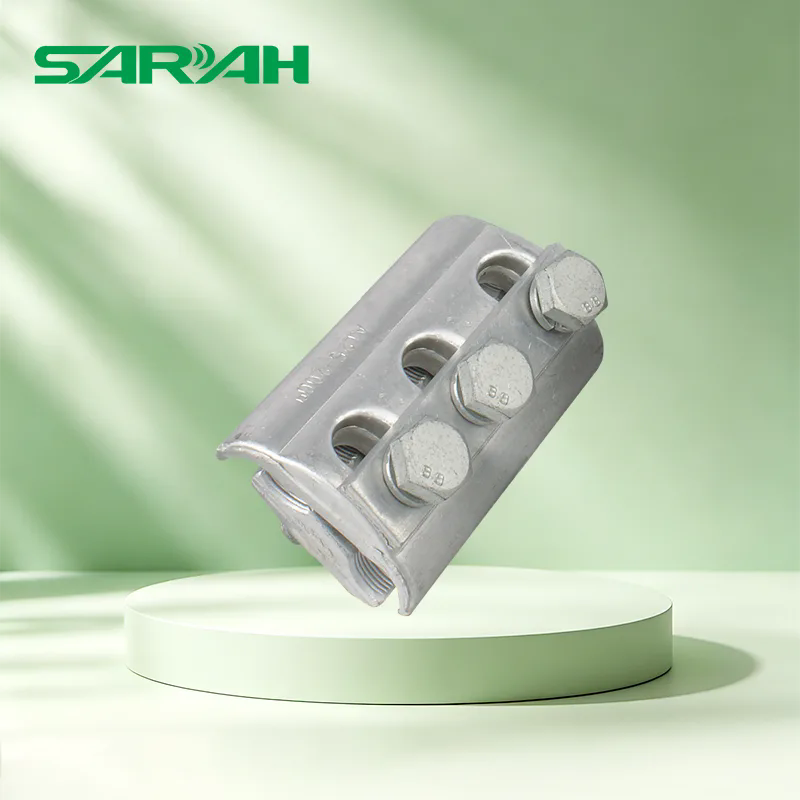
Overhead Line Fittings are classified by their primary function into five main categories. Suspension clamps are used to support conductors at intermediate towers, allowing them to hang freely and accommodate small angular deviations. Tension clamps are used at dead-end towers and angle towers, where they must withstand the full mechanical tension of the conductor. Connecting fittings (such as clevises, eyes, and yokes) link various components together, providing flexible or rigid connections as required. Protective fittings include devices like vibration dampers and armour rods, which protect conductors from dynamic stresses. Splicing fittings are used to join two lengths of conductor together, either permanently or temporarily. Each of these categories encompasses a wide range of specific products, designed for different conductor sizes, tension levels, and environmental conditions.
The importance of proper selection and installation of Overhead Line Fittings cannot be overstated. A failed fitting can cause a conductor to drop, potentially leading to a catastrophic line failure, widespread power outages, and significant safety hazards. Yueqing Sarah Electric Co., Ltd., a leading manufacturer with over 18 years of experience, produces a comprehensive range of Overhead Line Fitting solutions that meet international standards. Our fittings are engineered with precision, manufactured from high-quality materials, and rigorously tested to ensure they deliver the required performance over decades of service.
1.1 Key Technical Specifications of Overhead Line Fittings
To fully specify an Overhead Line Fitting, engineers must understand a set of critical technical parameters. These specifications define the fitting's mechanical strength, electrical performance, and environmental durability. The following table provides a comprehensive overview of the key specifications for a range of Overhead Line Fitting products, along with their significance in real-world applications.
| Parameter | Typical Value Range | Significance for Performance |
| Material | Hot-dip galvanized steel, aluminum alloy, stainless steel | Determines strength, corrosion resistance, and weight |
| Breaking Load (kN) | 10 kN to 1,200 kN | Indicates the maximum mechanical force the fitting can withstand |
| Applicable Conductor Diameter (mm) | 6 mm to 50 mm | Ensures correct grip and fit for the specific conductor |
| Galvanization Coating Thickness (µm) | 60 µm to 100 µm (per ASTM A153) | Determines corrosion resistance and service life in outdoor environments |
| Operating Temperature Range | -40°C to +80°C | Ensures performance across climatic extremes |
| Electrical Resistance (µΩ) | < 10 µΩ (for conductive fittings) | Minimizes power loss and heating at connection points |
| Weight (kg) | 0.2 kg to 20 kg | Affects installation effort and tower loading |
Each of these parameters is carefully defined during the design phase. The breaking load, for example, is typically set at 2.5 to 3 times the maximum working load, providing a critical safety margin. The galvanization thickness is specified based on the expected service life and environmental exposure level. For coastal areas, a thicker coating may be required to resist salt corrosion. The electrical resistance of conductive fittings (such as those used in bonding or earthing applications) is minimized through careful material selection and precision machining. Sarah manufactures all its Overhead Line Fitting products in accordance with international standards such as IEC, ANSI, and BS, ensuring that every component meets the highest quality and performance requirements.

2. How Do Overhead Line Fittings Support and Protect Conductors?
The most fundamental role of an Overhead Line Fitting is to provide mechanical support and protection for the conductors. Consider a typical transmission line with a 500 kV capacity. The conductors are heavy—a 500 mm² ACSR (Aluminum Conductor Steel Reinforced) conductor weighs approximately 1.5 kg per meter, and a span of 400 meters means over 600 kg of conductor between two towers. The conductor must be held securely at each tower, but it must also be allowed to move and flex as temperatures change, wind blows, and loads vary. This is where the suspension and tension clamps come into play.
A suspension clamp is designed for use at intermediate towers, where the conductor simply passes through and is supported. The clamp holds the conductor firmly to prevent longitudinal creep, but it allows the conductor to swing slightly to accommodate changes in angle and tension. The design of the clamp is critical: it must provide a secure grip on the conductor without causing damage to the conductor strands. Our factory uses high-quality malleable iron or aluminum alloy castings, and the interior surfaces are often lined with a soft metal insert, such as aluminum or aluminium bronze, to protect the conductor from mechanical damage. The suspension clamp is also designed to accommodate a range of conductor diameters, using interchangeable inserts or shims.
A tension clamp serves a different purpose. It is used at dead-end towers, where the line terminates, or at angle towers where the line changes direction significantly. Here, the clamp must withstand the full mechanical tension of the conductor—often several tens of kilonewtons. Tension clamps typically use a "bolt-type" design that compresses the conductor between two jaws, creating a high-friction grip that resists pulling forces. The clamping force must be carefully controlled to avoid crushing the conductor. Our tension clamps are designed with a helical or wedge-action mechanism that provides a high grip strength with a controlled clamping pressure, ensuring long-term security without conductor damage.
Sarah has developed a range of suspension and tension clamps that are engineered to provide the optimal balance of grip strength, conductor protection, and ease of installation. Our clamps are manufactured to exacting tolerances and are tested to ensure they meet the required breaking load and electrical resistance specifications. By selecting the correct clamp for the application, engineers can ensure that the conductor is properly supported and protected, contributing to the overall reliability and safety of the transmission line.
3. What Role Do Overhead Line Fittings Play in Electrical Continuity?
Beyond mechanical support, Overhead Line Fittings play a critical role in ensuring electrical continuity across the transmission line. The conductors themselves are continuous along the line, but there are many points where the current must pass through a fitting—for example, at the connection between the conductor and the dead-end clamp, or at a splice where two lengths of conductor are joined. At these points, the fitting must provide a low-resistance, reliable electrical path. Any resistance at the connection will generate heat, which can lead to oxidation, further increases in resistance, and eventual failure. This is a classic example of a "thermal runaway" scenario, which can cause the fitting to overheat and the conductor to fail.
The electrical performance of an Overhead Line Fitting is determined by two factors: the material used and the contact design. The preferred materials for electrical connections are those with high conductivity, such as pure aluminum, aluminum alloy, or copper. However, these materials are generally softer and less mechanically strong than steel. For this reason, many Overhead Line Fittings use a combination of materials: a high-strength steel or malleable iron body provides the mechanical strength, while a high-conductivity aluminum or copper insert provides the electrical contact. The contact design itself is also crucial. A simple bolt-type connection, if not torqued correctly, can have a high contact resistance. A connection that is designed to deform the conductor slightly at the contact point can create a larger surface area for current flow, reducing the resistance.
Consider a case study from a utility company in South America. They had been experiencing recurrent overheating issues at the dead-end connections on a critical 220 kV line. The problem was traced to the use of standard tension clamps that were not designed for the specific conductor type, resulting in a high contact resistance. The solution involved replacing the clamps with a specially designed Overhead Line Fitting that incorporated a high-conductivity aluminum insert and a large contact area. After the replacement, the overheating ceased, and the line has operated without incident for over five years. Yueqing Sarah Electric Co., Ltd. places great emphasis on the electrical performance of our Overhead Line Fitting. Our products are designed with optimized contact geometries and are tested for resistance to ensure they meet the required standards. By selecting the correct fitting and ensuring proper installation, engineers can ensure that electrical continuity is maintained, minimizing losses and preventing heating failures.
4. How Do Overhead Line Fittings Mitigate Vibration and Prevent Damage?
One of the most insidious threats to overhead transmission lines is vibration. Wind-induced vibration, known as "Aeolian vibration," can cause the conductor to oscillate at high frequencies, leading to fatigue failure of the conductor strands near the suspension points. In more severe cases, low-frequency "galloping" can cause conductors to collide and short-circuit. Overhead Line Fittings play a crucial role in mitigating these vibration effects. Vibration dampers, spacer dampers, and armour rods are all specialized types of Overhead Line Fitting designed to protect conductors from the damaging effects of oscillation.
Consider a 400 kV line running across a flat, open plain. The wind is constant and the terrain provides no shelter. The conductors begin to vibrate, and over time, the repeated flexing at the suspension clamp causes the conductor strands to work-harden and fracture. If this continues, the conductor can break, leading to a line failure. The solution is to install vibration dampers. A vibration damper is a weight attached to the conductor by a spring and a mass. The system is tuned to resonate at the same frequency as the conductor vibration. The damper dissipates the energy of the vibration, converting it to heat, and thereby preventing the damaging oscillation.
Another approach is the use of spacer dampers on bundled conductors. In a two-conductor bundle, each conductor is held at a fixed distance from its neighbour by a spacer. The spacer is designed to allow the conductors to move independently at different frequencies, preventing the build-up of resonant vibration. In some cases, armour rods are used. These are preformed rods made of aluminum or steel that are wrapped around the conductor at the point of suspension, providing a protective layer that distributes the bending stress over a longer length, reducing the stress at any one point. Yueqing Sarah Electric Co., Ltd. manufactures a comprehensive range of protective Overhead Line Fitting, including vibration dampers, spacer dampers, and armour rods. Our products are designed to provide effective protection against the dynamic forces that threaten transmission line integrity, ensuring long-term reliability and safety.
5. How Do Overhead Line Fittings Ensure Long-Term Reliability in Harsh Environments?
Overhead transmission lines are often located in the most unforgiving environments on earth. They traverse coastal regions with salt-laden air, industrial zones with aggressive pollutants, high-altitude locations with extreme cold, and deserts with intense UV radiation. The Overhead Line Fitting, which is exposed to all of these elements, must be designed to endure. Long-term reliability is not a luxury; it is a fundamental requirement. A failed fitting in a remote location can be incredibly expensive to repair, both in terms of the cost of the repair itself and the lost revenue from the outage.
The primary challenge is corrosion. The most common material for Overhead Line Fitting is steel, and unprotected steel will rust quickly in any outdoor environment. To prevent this, the steel is protected by a coating of zinc, applied through a hot-dip galvanizing process. The thickness of the zinc coating is critical: a thin coating will be quickly consumed, while a thicker coating provides a longer service life. Our factory's galvanizing process produces a coating that meets ASTM A153 standards, with a typical thickness of 70-100 micrometres. For the most demanding environments, such as marine or highly polluted areas, we offer fittings with additional corrosion protection, such as a three-layer coating system or the use of stainless steel. The choice of material and coating must be matched to the environmental exposure, and we work closely with our customers to select the optimal solution for their specific conditions.
Another factor in long-term reliability is the mechanical and thermal performance of the fitting. The fitting must maintain its grip strength and electrical contact performance over the full range of expected operating temperatures. The coefficient of thermal expansion of the materials must be carefully matched to the conductor to avoid slippage or galling. Sarah subjects all our Overhead Line Fitting products to a comprehensive range of tests, including salt-spray corrosion tests, thermal cycling tests, and tensile tests, to verify their long-term performance. Our factory is approved by the China National Center for Quality Supervision and Testing for these products, providing our customers with independent verification of our quality. Through a combination of careful material selection, robust design, and rigorous testing, we ensure that our Overhead Line Fitting deliver the reliability that transmission system operators require.
6. Frequently Asked Questions (FAQ)
Question 1: What materials are Overhead Line Fittings typically made from?
Answer: Overhead Line Fitting are typically manufactured from high-quality steel, aluminum alloy, or stainless steel. Steel fittings are usually hot-dip galvanized to provide corrosion protection. Aluminum alloy fittings are lighter and offer good corrosion resistance, making them suitable for many applications. Stainless steel fittings are used in highly corrosive environments such as coastal or industrial zones. Yueqing Sarah Electric Co., Ltd. offers Overhead Line Fitting in all three materials, enabling our customers to select the optimal solution for their specific environmental and mechanical requirements.
Question 2: What are the signs that an Overhead Line Fitting needs to be replaced?
Answer: The most common signs of a failing Overhead Line Fitting include visible corrosion or rust, especially if the galvanization has been compromised; mechanical damage such as cracks or deformation; signs of overheating (discoloration of the metal); and any visible loosening or slippage of the fitting on the conductor. During routine inspections, any fitting that shows significant corrosion, wear, or damage should be replaced. A proactive approach to inspection and replacement is essential to prevent line failures.
Question 3: What is the difference between a suspension clamp and a tension clamp?
Answer: The primary difference is the load they are designed to carry. A suspension clamp is used at intermediate support towers, where the conductor is supported vertically and allowed to swing horizontally. It does not carry significant horizontal tension. A tension clamp is used at dead-end or angle towers, where it must withstand the full mechanical tension of the conductor. Tension clamps are typically heavier and more robust than suspension clamps, and they employ a different gripping mechanism to resist pulling forces.
Question 4: How does a vibration damper work to protect overhead lines?
Answer: A vibration damper is a mass-spring system attached to the conductor. It is tuned to absorb the energy of the conductor's vibration at specific frequencies, dissipating it as heat and reducing the amplitude of the oscillation. This prevents the conductor from experiencing the high-cycle fatigue that can lead to strand breakage. The placement and tuning of dampers are carefully calculated based on the line's characteristics to provide optimal protection. Our factory at Yueqing Sarah Electric Co., Ltd. provides comprehensive selection and installation guidance to ensure effective vibration protection.
Question 5: Do different voltage levels require different types of Overhead Line Fittings?
Answer: Yes, the voltage level of the transmission line influences the type and specification of Overhead Line Fitting required. Higher voltage lines use larger, more heavily constructed fittings to handle the greater mechanical loads and larger conductor sizes. They also require fittings with improved electrical performance to minimize corona discharge and radio interference. However, the fundamental types of fittings are similar across all voltage levels; the difference is in the specific size, strength rating, and electrical design. Yueqing Sarah Electric Co., Ltd. offers Overhead Line Fitting for distribution (up to 35 kV) and transmission (up to 500 kV) applications.
7. About Yueqing Sarah Electric Co., Ltd.
Yueqing Sarah Electric Co., Ltd., established in 2005 and located in Yueqing, Wenzhou, China, is a leading manufacturer of medium- and high-voltage electrical equipment. With a 35,000m² facility and approximately 100 employees, Sarah exports to over 30 countries, including Sweden, Spain, the USA, South Africa, Australia, and Vietnam. We specialize in surge arresters, drop-out fuse units, composite and porcelain insulators, disconnect switches, and a complete range of Overhead Line Fitting. Our products are tested and certified by China's National High Voltage Apparatus Quality Supervision Testing Center, and our quality management system is ISO9001 certified. Committed to continuous improvement and customer satisfaction, we serve utilities and infrastructure projects worldwide with reliable, high-performance products.

8. Conclusion
Overhead Line Fittings are the essential, but often overlooked, components that make power transmission systems possible. They provide the mechanical support that holds conductors aloft, the electrical continuity that ensures power flows, the protective measures that guard against vibration and damage, and the environmental durability that ensures long-term reliability. From the smallest suspension clamp to the largest dead-end fitting, each component is a carefully engineered device that must perform flawlessly for decades. The selection of the correct Overhead Line Fitting requires a thorough understanding of the line's design requirements, the conductor's characteristics, and the environmental conditions at the installation site. By making informed choices, utilities and infrastructure developers can ensure that their transmission lines are not only efficient and safe but also resilient for the long haul.
Yueqing Sarah Electric Co., Ltd. has been manufacturing high-quality Overhead Line Fitting products for over 18 years, and our experience and expertise are at your disposal. We invite you to explore our comprehensive product range and to contact our team of experts for guidance on selecting the right fittings for your project. Whether you are building a new line, upgrading an existing one, or maintaining an aging infrastructure, we have the products and knowledge to support you. Contact Yueqing Sarah Electric Co., Ltd. today to learn more about our overhead line fitting solutions and how we can help you build a more reliable and resilient power transmission network.
Related News
- What Is a 36KV Dry Type Transformer and How Can It Improve Power Distribution Safety?
- What Is a 33kV Pole Mounted Transformer and How Does It Support Reliable Power Distribution?
- How Can a 20KV Power Transformer Deliver Reliable and Efficient Industrial Power?
- How Does a 145KV Power Transformer Deliver Reliable High-Voltage Power?
- How Does a 110KV Power Transformer 20000KVA Improve High-Voltage Power Transmission Efficiency?
- How Does a 33KV Oil Immersed Distribution Transformer Support Reliable Power Distribution?
Leave me a message